


Blog / Ford Transit

Configuring the 2027 Ford Transit® for Work Routes around Mableton, GA

2027fordtransit-exterior-02
Configuring the 2027 Ford Transit® for Work Routes around Mableton, GA

Lithia Springs Ford - Configuring the 2027 Ford Transit® for Work Routes around Mableton, GA

Choosing a commercial van is not just about picking the largest vehicle on the lot. For many Mableton, GA drivers, the right van has to fit tight neighborhood streets, business deliveries near Veterans Memorial Highway, jobs across the East-West Connector, and quick highway runs toward I-20 or I-285. That is where the 2027 Ford Transit® becomes especially compelling. It gives shoppers a practical way to build a van around real work, whether the priority is cargo space, passenger seating, electric capability, available Intelligent All-Wheel Drive, or technology that helps make long days more manageable.

At Lithia Springs Ford, we often speak with business owners and organizations that know a van is needed but are still deciding which configuration makes the most sense. A contractor may need a High Roof Cargo Van with shelving and room for tall materials. A hotel, church, school, or community group may need a Passenger Van that can seat up to 15 people. A local delivery operation may be interested in the E-Transit™ Cargo Van for predictable daily routes and an electric powertrain. The strength of the 2027 Ford Transit® is that it supports all of those conversations within one versatile Ford van family.

Start with the Job, Not Just the Van

The best Transit® configuration starts with a clear look at how the vehicle will be used most often. If your workday around Mableton includes repeated stops, equipment access, and route-based service calls, cargo organization may be more important than maximum passenger space. If your organization transports groups across Cobb County, seating layout, entry comfort, and driver visibility may matter more. Ford makes this easier by offering multiple configurations, including Transit® Cargo Van, Transit® Passenger Van XL, Transit® Passenger Van XLT, and E-Transit™ Cargo Van.

  • Cargo Work: Choose a Transit® Cargo Van if tools, supplies, parts, packages, or trade equipment are your daily priority.
  • Passenger Travel: Choose a Transit® Passenger Van if your organization needs comfortable seating for group transportation.
  • Local Electric Routes: Consider the E-Transit™ Cargo Van if your business has predictable routes and wants a fully electric powertrain.
  • Added Traction: Consider available Intelligent All-Wheel Drive if your routes include uneven lots, work sites, or added traction needs.

Roof Height and Body Length Matter

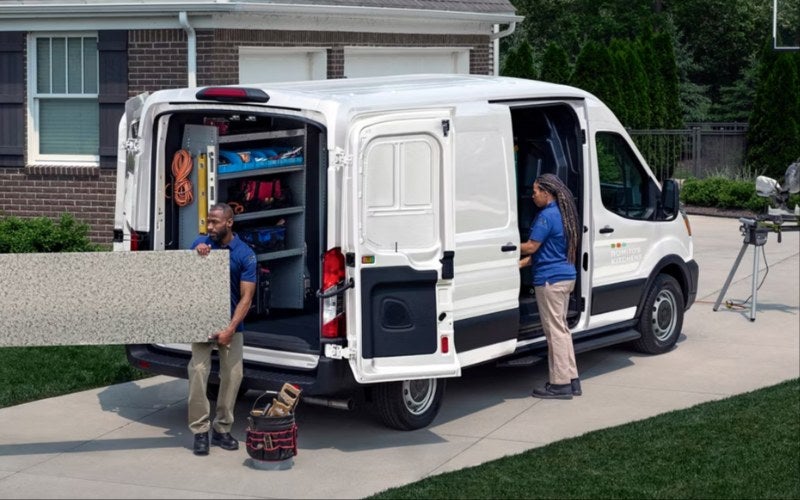
One of the major advantages of the 2027 Ford Transit® Cargo Van is the ability to choose from three roof heights and three body lengths. Low, Medium, and High roof options help match the van to the way you move inside the cargo area. Regular, Long, and Extended lengths help you balance maneuverability with total cargo room. For a mobile technician who needs to park in tighter spaces around Mableton, a smaller configuration may make sense. For a contractor or delivery business carrying larger loads, a longer body and taller roof can be a smarter daily tool.

This flexibility is a key reason the Transit® is so useful for different industries. A florist, electrician, caterer, plumber, courier, and nonprofit can all look at the same van family and reach very different configuration decisions. The Transit® is not limited to one type of work, and that helps shoppers avoid buying too little van or overcommitting to more size than the daily route requires.

Powertrain Choices for Real-World Needs

Gas-powered 2027 Ford Transit® models offer a 3.5L PFDi V6 or an available 3.5L EcoBoost® V6. The 3.5L PFDi V6 is a practical fit for many daily users, while the available 3.5L EcoBoost® V6 adds turbocharged strength for shoppers who want more responsive power. The Transit® also offers available Intelligent All-Wheel Drive, which can be valuable for drivers who face uneven job sites, gravel access roads, sloped driveways, or busy commercial lots.

The E-Transit™ Cargo Van brings another important option into the conversation. Its fully electric powertrain can be a strong fit for local businesses with predictable routes, depot charging plans, and a focus on reducing tailpipe emissions. Available Pro Power Onboard™ - 2.4 kW also helps support work needs by providing convenient power access for compatible tools and equipment. For Mableton-area businesses that spend most of the day making local stops rather than long-distance travel, the E-Transit™ deserves a close look.

Technology That Supports the Driver

A van driver often has a lot to manage: traffic, delivery timing, customer calls, parking, cargo awareness, and route changes. The 2027 Ford Transit® helps with technology designed to be useful rather than distracting. The available 12-inch Center Display with SYNC® 4 gives the cabin a modern command center, while standard Ford Co-Pilot360® technology helps support daily awareness.

  • Parking Support: Front and rear parking sensors help during low-speed maneuvers in crowded or confined areas.
  • Collision Assistance: Pre-Collision Assist® with Automatic Emergency Braking can help alert the driver and assist with braking.
  • Lane Support: Lane-Keeping System helps support awareness during longer drives and highway travel.
  • Camera Visibility: Transit® Passenger Van XLT includes Ford Co-Pilot360® Assist 2.0 with Adaptive Cruise Control and 360-Degree Camera.

For drivers moving through Mableton traffic, business parks, school areas, or downtown Atlanta routes, those systems can help reduce stress. The Transit® still feels like a hard-working commercial vehicle, but its technology adds refinement that many drivers appreciate after long days on the road.

Why Local Shoppers Should Compare with Lithia Springs Ford

Lithia Springs Ford is a helpful resource for Mableton-area shoppers because we understand that a Transit® purchase is often tied to work performance, scheduling, and long-term service needs. Our team can help you compare roof heights, body lengths, seating layouts, gas and electric powertrains, payload needs, and available AWD. We can also help you use online tools to browse inventory, apply for financing, estimate buying power, and value your trade before visiting our dealership.

Service support is another important part of the decision. Commercial vans need dependable maintenance from technicians who understand Ford vehicles. Our factory-trained technicians use genuine Ford parts, and Ford Mobile Service or Ford Pickup & Delivery may help reduce downtime when applicable. For businesses, that convenience can be just as valuable as the right cargo area or engine choice.

Frequently Asked Questions:

How many people can the 2027 Ford Transit® seat?

Passenger Van configurations can seat up to 15 people, making the Transit® a strong choice for group transportation, shuttle service, churches, schools, teams, and organizations.

Is the 2027 Ford Transit® available with All-Wheel Drive?

Yes. The 2027 Ford Transit® offers available Intelligent All-Wheel Drive on applicable models, which can help add confidence for shoppers who want extra traction support.

What is the maximum payload for the 2027 Ford Transit® Cargo Van?

When properly equipped, the 2027 Ford Transit® Cargo Van offers a maximum payload of 5,047 lbs, giving businesses a strong platform for tools, equipment, inventory, and delivery needs.

Does the 2027 Ford Transit® offer an electric model?

Yes. The E-Transit™ Cargo Van features a fully electric powertrain and is designed for businesses that want practical cargo capability with electric operation.

The 2027 Ford Transit® is a strong fit for Mableton, GA shoppers because it can be configured around the way local drivers actually use a van. It works for cargo, passengers, upfits, local deliveries, mobile service, and electric fleet planning. If you are comparing vans online, the smartest next step is to define your daily workload, review available Transit® configurations, and connect with Lithia Springs Ford for guidance. We can help you narrow the choices and move toward a Ford van that feels purpose-built for your routes, your passengers, and your business goals.
Request more 2027 Ford Transit information

Posted in:

Related Posts

2027fordtransit-exterior-01

How Much Cargo Space and Payload Does the 2027 Ford Transit® Offer for Marietta, GA Businesses?

Lithia Springs Ford - How Much Cargo Space and Payload Does the 2027 Ford Transit® Offer for Marietta, GA Businesses? The 2027 Ford Transit® gives Marietta, GA business owners a practical way to match cargo space and payload capacity to the work that happens every day. For contractors, delivery operators, mobile service providers, event teams, caterers, and growing fleet managers, the right van has to do more than look capable on paper. It needs usable room, accessible loading points, upfit potential, smart technology, and enough strength to carry tools, materials, parts, or packages without slowing down the schedule. Ford designed the Transit® lineup around flexibility, and that matters for businesses operating around Cobb Parkway, Powder Springs Street, Roswell Road, and nearby job sites throughout the greater Marietta area. Some drivers need a compact-feeling van that can manage tight parking lots and frequent stops. Others need a high-roof cargo area that allows easier movement inside the van, plus enough volume for shelves, bins, ladders, inventory, or service equipment. The 2027 Transit® provides a wide range of configurations, helping business owners choose a van based on workflow rather than settling for a single layout. Cargo Space Starts With the Right Body and Roof The 2027 Ford Transit® Cargo Van is available in three roof heights and three body lengths. Roof height choices include Low, Medium, and High, while length options include Regular, Long, and Extended. This structure makes the van highly adaptable because cargo space is not just about length from front to back. It is also about vertical clearance, walk-in convenience, and how easily a driver can reach tools or inventory during a busy route. A Low Roof Transit® may work well for businesses that prioritize parking access and do not need to stand inside the van. A Medium Roof can create a useful balance for many service professionals, offering more vertical room while still feeling manageable during daily driving. A High Roof Transit® is especially appealing for trades and mobile work setups because the added height can make interior organization easier. For a mobile electrician, HVAC technician, or delivery operator, being able to move more naturally in the cargo area can save time at every stop. Payload Capacity for Serious Work Payload is one of the most important numbers to review before choosing any cargo van. The 2027 Ford Transit® Cargo Van offers a maximum payload of 5,047 lbs when properly equipped. That capability gives businesses the strength to carry tools, materials, equipment, packaged goods, or job-specific upfits. For many Marietta-area companies, payload directly affects productivity because a van that can carry more in a safe and organized way may reduce repeat trips and improve route efficiency. The E-Transit™ Cargo Van also brings impressive usefulness with a maximum payload of 3,322 lbs. For businesses with predictable daily routes, local deliveries, campus operations, or scheduled service areas, the fully electric E-Transit™ can be a strong fit. It offers the same general Transit® approach to usable cargo space while adding electric operation and available Pro Power Onboard™ - 2.4 kW, which can help support tools and equipment away from a fixed power source. How to Match a Transit® Configuration to Your Business Choosing the right Transit® starts with understanding the heaviest and most space-demanding day of the month. A van may feel roomy when empty, but shelves, partitions, bins, replacement parts, toolboxes, safety gear, and job materials can change the way the cargo area functions. Before selecting a configuration, business owners should map out the load and think about how drivers will move through the van during a normal route. Contractors: Consider a Medium Roof or High Roof Transit® with a Long or Extended body if interior shelving, ladder storage, and bulky materials are part of the routine. Delivery businesses: Focus on door access, aisle width, floor space, and the ability to organize packages by route or stop sequence. Mobile service teams: Look for roof height that supports comfortable access to drawers, bins, and equipment without constant bending or unloading. Event and catering crews: Review load floor length, tie-down needs, and vertical clearance for stacked containers, carts, or display materials. Electric fleet planners: Compare E-Transit™ payload, route distance, charging plans, and available Pro Power Onboard™ for daily operational fit. That type of planning can help prevent choosing too little space or more van than the business truly needs. It also helps with future upfits, because a cargo van becomes more productive when storage systems, partitions, and work zones are designed around actual daily use. Technology Helps Manage a Larger Vehicle Cargo space and payload matter most when the van is easy to use, and the 2027 Transit® supports drivers with practical technology. Ford Co-Pilot360® technology includes helpful systems such as front and rear parking sensors, Pre-Collision Assist® with Automatic Emergency Braking, and Lane-Keeping System. These features are especially valuable in commercial driving, where a van may enter tight loading areas, back into service spaces, or travel through busy local corridors throughout Marietta. The available 12" center display with SYNC® 4 also supports a more modern workday. A clear display can help drivers manage key vehicle functions, navigation support, and connectivity with less frustration. For businesses with multiple drivers, straightforward controls and useful visibility features can make training easier and help keep routes running smoothly. On select configurations, available camera technology can also support awareness when maneuvering around storefronts, warehouses, apartment communities, schools, and job sites. Gas and Electric Options Add Flexibility The 2027 Transit® lineup includes gas-powered models with the 3.5L PFDi V6 or available 3.5L EcoBoost® V6. The 3.5L PFDi V6 is a practical choice for everyday capability, while the 3.5L EcoBoost® V6 can be appealing for drivers who want stronger response when the van is loaded or routes include frequent merging and highway driving. Available Intelligent All-Wheel Drive is another important consideration for businesses that visit construction sites, rural properties, gravel lots, or uneven access roads. The E-Transit™ Cargo Van brings a different kind of value for businesses with planned daily routes. Because many local service and delivery operations return to the same base each day, electric operation can fit naturally into the workflow. The E-Transit™ also supports businesses that want a professional van with meaningful cargo capability and the potential to power certain tools or devices through available Pro Power Onboard™. Questions to Ask Before Choosing Cargo Space Before buying, business owners can save time by answering a few practical questions. The best Transit® configuration should support the job today while leaving enough flexibility for growth, new equipment, or added route demands. Daily load: What tools, materials, or inventory stay in the van every day? Peak load: What is the heaviest or largest load the van must carry during a busy week? Interior movement: Does the driver need to stand, sort, or work inside the cargo area? Parking environment: Will the van regularly enter garages, tight lots, service alleys, or dense retail areas? Upfit plan: Will shelves, partitions, racks, refrigeration, drawers, or power equipment be added? These answers help clarify whether the best fit is a smaller, easier-to-park configuration or a larger Transit® with more cargo volume and vertical capability. A test drive should include a close look at door openings, step-in height, mirror visibility, turning feel, and how the cargo area would function once fully organized. Frequently Asked Questions: What is the maximum payload for the 2027 Ford Transit® Cargo Van? The 2027 Ford Transit® Cargo Van offers a maximum payload of 5,047 lbs when properly equipped. Payload depends on configuration, equipment, and other factors, so shoppers should review the specific model and setup before making a decision. Does the E-Transit™ Cargo Van offer useful payload? Yes. The E-Transit™ Cargo Van offers a maximum payload of 3,322 lbs, making it a strong option for local delivery, service routes, and business operations that can benefit from fully electric operation. Which roof height is best for a work van? The best roof height depends on the job. Low Roof models can be easier to manage in certain parking situations, while Medium Roof and High Roof configurations add vertical room that may improve organization and movement inside the cargo area. Can the 2027 Ford Transit® be upfitted for business use? Yes. The Transit® is a strong platform for business upfits, including shelving, partitions, storage systems, racks, and specialized work layouts. Shoppers should plan upfit needs early so the body length, roof height, payload, and powertrain match the intended use. For Marietta, GA businesses, the 2027 Ford Transit® is valuable because it can be matched to a specific workflow. The combination of available roof heights, body lengths, payload capability, gas and electric powertrains, available Intelligent All-Wheel Drive, and helpful Ford Co-Pilot360® technology makes it much more than a basic cargo van. It is a configurable tool for business growth. The smartest next step is to compare configurations in person and think through how the van will operate after shelves, cargo, equipment, or passengers are added. With the right layout, the 2027 Transit® can help drivers stay organized, reduce extra trips, support daily productivity, and present a professional image everywhere the workday leads. Request more 2027 Ford Transit information

2027fordtransit-exterior-02

What to Know About the 2027 Ford Transit

Lithia Springs Ford - What to Know About the 2027 Ford Transit The 2027 Ford Transit is built for people and businesses that need a van to do more than simply move from one place to another. It is a mobile workspace, a passenger carrier, a delivery partner, and a configurable business tool. With multiple body styles, available gas and electric powertrains, useful driver-assist technology, and a cabin designed around practical daily use, the Transit continues to stand out as one of the most versatile commercial vans in the Ford lineup. At Lithia Springs Ford, we understand that choosing the right van is about matching capability to real work. A contractor may need standing room and organized cargo space. A shuttle service may need comfortable seating for larger groups. A delivery operation may want strong payload ratings and technology that supports route-based productivity. The 2027 Ford Transit gives drivers and fleet operators a wide range of options, making it easier to build a van around a specific job rather than adapting a job around a van. A Van Lineup Built Around Flexibility One of the biggest strengths of the 2027 Ford Transit is the variety of available configurations. Ford offers the Transit as a Cargo Van, Passenger Van XL, Passenger Van XLT, and E-Transit Cargo Van. This gives shoppers a clear path depending on whether the priority is hauling materials, transporting people, reducing tailpipe emissions, or creating a specialized upfit for daily business use. The Transit Cargo Van is a strong fit for trades, deliveries, service calls, and mobile operations. It offers multiple roof heights and body lengths, which makes it easier to choose the right balance of interior room, maneuverability, and storage capacity. Passenger Van models are designed for group transportation, with seating configurations that can accommodate up to 15 passengers. For businesses focused on electrification, the E-Transit Cargo Van provides a fully electric powertrain while preserving the usefulness expected from a commercial van. Key 2027 Ford Transit Highlights Multiple configurations: Cargo Van, Passenger Van XL, Passenger Van XLT, and E-Transit Cargo Van options support a wide range of business and personal needs. Gas engine choices: Available 3.5L PFDi V6 and 3.5L EcoBoost V6 engines help drivers choose the right mix of power and efficiency. Available all-wheel drive: Intelligent all-wheel drive is available for added confidence in demanding driving conditions and varied work routes. Flexible roof and length options: Select models offer low, medium, and high roof choices along with regular, long, and extended length options. Advanced driver assistance: Ford Co-Pilot360 technology adds confidence with helpful features designed to support awareness. Electric work capability: The E-Transit Cargo Van brings fully electric operation and available Pro Power Onboard for jobsite utility. Performance Options for Different Workloads The 2027 Transit offers two available gas engines: a 3.5L PFDi V6 and a 3.5L EcoBoost V6. The naturally aspirated V6 is a practical choice for many everyday commercial needs, while the EcoBoost engine is designed to deliver stronger output for drivers who want added power for heavier demands. Both engine choices are paired with the kind of capability Transit owners expect from a van built for work. For drivers who manage longer routes or busier schedules, the available extended range fuel tank can be a valuable option on select models. Rear-wheel drive is standard on many configurations, and available Intelligent All-Wheel Drive adds traction-focused confidence. That matters for businesses that cannot pause daily operations just because a route includes gravel lots, steep driveways, construction sites, or unpredictable road surfaces. Cargo Space, Payload, and Towing Capability The 2027 Ford Transit is designed to carry more than just tools or boxes. It is built to help organize the workday. The Cargo Van can be configured with different roof heights and lengths, allowing business owners to prioritize walk-in space, long-item storage, shelving systems, or open cargo volume. A high-roof model can make it easier to stand and move inside the van, while extended-length configurations can support larger loads and more complex upfits. When properly configured, the Transit Cargo Van offers a maximum payload rating of up to 5,047 pounds and a maximum towing capacity of up to 6,900 pounds. Those figures make it a strong option for businesses that need to transport equipment, supplies, tools, inventory, or towable gear. The E-Transit Cargo Van also brings serious utility, with a maximum payload rating of up to 3,322 pounds, making it a practical electric option for delivery routes, service work, and other cargo-focused operations. Interior Design That Works Hard Inside, the 2027 Transit focuses on space, visibility, and daily usability. The cabin is designed to feel familiar and functional, with controls placed for easy access and available technology that helps drivers stay connected. The available 12-inch center display with SYNC 4 gives the interior a modern command-center feel, allowing access to navigation, communication, entertainment, and vehicle settings through a clear interface. The passenger-focused Transit models add another layer of practicality. With seating options for up to 15 people, the Passenger Van can serve hotels, churches, schools, medical transport providers, teams, tour companies, and large families. Instead of feeling like a basic people mover, the Transit Passenger Van offers a balanced approach to space and comfort, making longer drives more manageable for both the driver and passengers. Technology and Driver-Assist Features Ford Co-Pilot360 technology is an important part of the 2027 Transit experience. Standard and available driver-assist features are designed to help improve awareness, reduce stress, and support safer daily operation. In a van, visibility and confidence matter. Whether backing into a loading area, navigating a tight parking lot, or driving through traffic on a full schedule, assistance features can make a meaningful difference. Depending on model and configuration, Transit shoppers can find features such as front and rear parking sensors, Pre-Collision Assist with Automatic Emergency Braking, Lane-Keeping System, Adaptive Cruise Control, and a 360-Degree Camera. The Passenger Van XLT adds an especially helpful technology package with Ford Co-Pilot360 Assist 2.0, making it a strong choice for operators who prioritize driver support and passenger confidence. Why Consider the E-Transit Cargo Van? The E-Transit Cargo Van is ideal for businesses that want to explore electric work vehicles without giving up the familiar Transit format. Its fully electric powertrain can support daily delivery routes, service appointments, urban business use, and other predictable driving routines. For companies tracking operating costs, sustainability goals, or fleet modernization, the E-Transit can be an appealing choice. Available Pro Power Onboard gives the E-Transit added value by allowing the van to function as a mobile power source for tools and equipment. This is especially useful for contractors, technicians, mobile service providers, and delivery professionals who need more than cargo space. The available Vehicle Integration System 2.0 also supports specialized business applications, making the E-Transit a forward-looking platform for customized work needs. Choosing the Right 2027 Ford Transit The best Transit configuration depends on how the van will be used. A compact service operation may prefer a regular-length Cargo Van with shelving and easy city maneuverability. A delivery company may want an extended-length model with maximum cargo space. A passenger transportation business may compare XL and XLT trims based on comfort, seating needs, and driver-assist features. A fleet manager may evaluate electric capability and charging needs with the E-Transit. Identify the primary job: Decide whether the van will carry people, cargo, tools, inventory, or specialized equipment. Choose the right body style: Compare Cargo Van, Passenger Van, and E-Transit options based on daily use. Select size and roof height: Consider parking access, interior standing room, cargo volume, and upfit plans. Review powertrain needs: Compare gas engine options, available all-wheel drive, towing needs, and electric suitability. Plan for technology: Look at driver-assist features, connectivity, camera systems, and fleet-support tools. For shoppers serving Douglasville, Austell, and Bremen, the Transit is especially compelling because it can adapt to many local business needs, from construction and home services to passenger transport and regional delivery. A properly selected Transit can help reduce inefficiencies, improve organization, and support a more professional customer experience every time the van arrives at a jobsite or pickup location. Frequently Asked Questions: What body styles are available for the 2027 Ford Transit? The 2027 Ford Transit lineup includes the Cargo Van, Passenger Van XL, Passenger Van XLT, and E-Transit Cargo Van. Each model serves a different purpose, from commercial hauling to group transportation to fully electric cargo duty. How many passengers can the 2027 Ford Transit carry? Depending on configuration, the Transit Passenger Van can seat up to 15 passengers. This makes it a useful option for shuttle services, organizations, travel groups, and businesses that need flexible people-moving capability. Is all-wheel drive available on the 2027 Ford Transit? Yes, available Intelligent All-Wheel Drive can be equipped on select Transit models. This feature can help improve confidence on varied surfaces and demanding routes. What engines are offered for the 2027 Ford Transit? The gas-powered Transit offers an available 3.5L PFDi V6 or 3.5L EcoBoost V6. The E-Transit Cargo Van uses a fully electric powertrain. What is the maximum payload for the 2027 Ford Transit? When properly configured, the Transit Cargo Van offers a maximum payload rating of up to 5,047 pounds. The E-Transit Cargo Van offers a maximum payload rating of up to 3,322 pounds. Is the 2027 Ford Transit good for business upfits? Yes. The Transit is well suited for shelves, racks, storage systems, partitions, mobile workspaces, and specialized trade equipment. Its range of body lengths, roof heights, and powertrain choices makes it a flexible foundation for many industries. Final Thoughts on the 2027 Ford Transit The 2027 Ford Transit stands out because it gives drivers and businesses choices that matter. It offers practical power, meaningful cargo and passenger flexibility, available all-wheel drive, modern driver-assist technology, and an electric option for companies moving toward a more efficient fleet strategy. Whether the goal is to carry tools, transport passengers, complete deliveries, or create a custom mobile workspace, the Transit remains one of the most adaptable vans available. For anyone comparing commercial vans, the smartest next step is to define daily needs first, then match those needs to the right Transit configuration. With the right roof height, length, drivetrain, seating layout, and technology package, the 2027 Ford Transit can become more than transportation. It can become a dependable part of the workday. Request more 2027 Ford Transit information

2027fordtransit-exterior-02

Does the 2027 Ford Transit® Have the Cargo Space Douglasville, GA Businesses Need?

Lithia Springs Ford - Does the 2027 Ford Transit® Have the Cargo Space Douglasville, GA Businesses Need? Choosing a commercial van often comes down to one practical question: will it carry the people, tools, inventory, and equipment your workday demands without making every route harder than it needs to be? For many businesses around Douglasville, GA, the Ford Transit® answers that question with a flexible lineup built around usable space, smart configurations, and work-focused capability. Whether your team handles deliveries, mobile repairs, catering, construction support, community transportation, or specialty services, cargo space is not just a measurement. It affects how efficiently your crew loads, how safely equipment is secured, how quickly jobs get done, and how professional your operation feels to customers. The Transit® van is designed around that exact need for adaptability. Ford offers Cargo Van, Passenger Van XL, Passenger Van XLT, and E-Transit™ Cargo Van models, giving shoppers different ways to prioritize storage, seating, powertrain preference, and business use. The Cargo Van can be configured with three roof heights and three body lengths, which gives buyers meaningful control over interior room. That matters for anyone deciding between shelving, bins, ladders, boxes, tools, large materials, or an open cargo floor for changing daily loads. Why Cargo Space Is More Than Cubic Feet When comparing commercial vans, shoppers often look first at overall cargo volume. That number is useful, but it does not tell the whole story. The shape of the space, the roof height, the body length, the door access, and the ability to stand or move inside the van can be just as important. A van with a tall roof may help technicians work more comfortably inside the cargo area. A longer body may better support delivery routes with bulky packages. A regular length model may be easier to maneuver in crowded parking areas or neighborhoods with tighter turns. Ford describes the Transit® interior with the idea, “Imagine the Possibilities. We’ve Got the Room.” That is a fitting way to think about the van because it can be adapted for a wide range of work. A contractor may install trade-specific shelving and storage bins. A florist may need open cargo room for arrangements and supplies. A mobile detailing business may prioritize organized storage for hoses, chemicals, towels, and equipment. A nonprofit may use a Passenger Van model for group travel while still needing space for bags and supplies. The right configuration depends on how your business moves through the day. Roof Heights and Body Lengths Make a Big Difference The Transit® Cargo Van is available in low, medium, and high roof heights, plus regular, long, and extended body lengths. These choices allow shoppers to think carefully about the balance between interior room and everyday drivability. A high roof can make it easier to stand, load tall items, or create a more functional mobile workspace. A medium roof may offer a strong balance for shoppers who want added vertical space without choosing the tallest profile. A low roof can be a practical fit for operations that prioritize easier access to certain parking areas while still needing a capable cargo van. Length is just as important. The extended body is useful for larger loads and more permanent storage systems, while long and regular body options can fit businesses that need cargo flexibility with a more compact footprint. For Douglasville-area routes that may include neighborhood streets, commercial centers, industrial areas, and interstate driving, matching the van size to the daily route can improve confidence behind the wheel. Low roof: A practical choice for shoppers who want cargo capability with a lower overall height. Medium roof: A balanced option for added vertical room and everyday usability. High roof: A strong fit for shoppers who need to stand, move around, or load taller items more easily. Regular length: Helpful for businesses that value maneuverability and flexible cargo room. Extended length: Ideal for larger cargo needs, more shelving, or higher-volume delivery work. After reviewing those choices, the next step is to think about how cargo is loaded and unloaded. If your workday includes frequent stops, rear-door access and side-door convenience may matter as much as overall capacity. If your van acts like a mobile workshop, interior organization may be the most important part of the build. Payload, Towing, and the Work Behind the Space Cargo space only matters if the van can support the weight your business needs to carry. The Transit® Cargo Van offers up to 5,047 lbs of maximum payload when properly equipped, while maximum towing capacity reaches up to 6,900 lbs when properly equipped. Those figures make it a serious option for businesses that carry tools, parts, inventory, supplies, and equipment. The E-Transit™ Cargo Van offers a maximum payload of 3,322 lbs, giving businesses interested in a fully electric commercial van a capable platform for many delivery and service applications. It is important to remember that payload is affected by configuration, passengers, installed equipment, and cargo. A shelving system, partition, roof rack, or specialty upfit can add weight before tools and products are loaded. That is why buyers should calculate typical daily cargo, not just the heaviest possible load. A careful review helps ensure the selected Transit® configuration supports the real work your team performs most often. Which Transit® Configuration Fits Your Cargo Needs? Different businesses ask different things from a van. A local delivery operation may want maximum open cargo room. A home services company may need an organized upfit with bins, drawers, and tool storage. A shuttle provider may choose a Passenger Van model and focus on seating, comfort, and luggage space. Ford makes that process easier by offering a range of Transit® models instead of one single layout. For delivery businesses: Consider a longer Cargo Van configuration with easy-access storage and enough room for route volume. For contractors: Look closely at medium or high roof options that can support shelving, tools, and taller materials. For mobile service teams: Focus on organization, payload, driver comfort, and available Intelligent All-Wheel Drive if job sites vary. For passenger transportation: Review Passenger Van XL and Passenger Van XLT seating layouts, including configurations for up to 15 people. For electric fleet planning: Explore the E-Transit™ Cargo Van, available Pro Power Onboard™ - 2.4 kW, and available Vehicle Integration System 2.0. Those categories are a helpful starting point, but many businesses overlap. A catering company may need both cargo capacity and a comfortable cabin. A school or church may need passenger space on some days and gear space on others. A construction company may need towing capability, payload strength, and room for organized equipment. The Transit® is appealing because it can be configured around these layered needs. Technology That Supports Daily Cargo Work Drivers who spend long hours in a commercial van benefit from technology that is clear and easy to use. The Transit® offers a 12" center display with SYNC® 4, helping keep key controls visible and accessible. Standard Ford Co-Pilot360® technology includes front and rear parking sensors, Pre-Collision Assist® with Automatic Emergency Braking, and Lane-Keeping System. These features are useful when drivers are navigating customer driveways, loading zones, busy streets, and parking areas with limited space. Passenger Van XLT models include standard Ford Co-Pilot360® Assist 2.0 with Adaptive Cruise Control and 360-Degree Camera. For shoppers who want added visibility support, the 360-Degree Camera can be especially helpful in a large van. It can make positioning the vehicle near loading docks, storefronts, job sites, and parking spaces feel more manageable. How to Evaluate Cargo Space During a Test Drive A test drive should include more than steering feel and acceleration. Bring measurements for the largest items your business carries. Think about how often cargo changes, whether drivers need to access tools from inside the van, and how much space upfits may require. If possible, compare multiple roof heights or body lengths on the same visit so differences are easier to judge. Measure your equipment: Bring dimensions for ladders, toolboxes, bins, coolers, cases, or product displays. Walk the cargo area: Check whether the roof height and floor length fit daily movement and loading needs. Picture your upfit: Consider shelves, partitions, tie-downs, racks, or specialty storage before choosing a model. Test door access: Make sure side and rear access match how your team loads throughout the day. Check driver comfort: A van that carries cargo well should also feel comfortable and controlled for the person driving it. Lithia Springs Ford can help shoppers compare Transit® configurations with a practical, business-focused approach. Our dealership is serving Douglasville, Austell, and Bremen with guidance for commercial buyers, fleet shoppers, and organizations that need a van built around real transportation demands. Frequently Asked Questions: Can the Transit® Cargo Van be used as a mobile workspace? Yes. Depending on configuration and upfit, the Transit® Cargo Van can serve as a mobile workspace for trades, service businesses, installation teams, and specialty operators. Medium and high roof options are especially useful for shoppers who want more vertical room inside the van. Is a high roof always the best choice for cargo? Not always. A high roof is excellent for standing room and taller cargo, but some shoppers may prefer a low or medium roof based on parking needs, route types, or loading habits. The best roof height depends on your cargo, workspace needs, and daily driving environment. How should I choose between Cargo Van and Passenger Van models? Choose the Cargo Van if storage, tools, equipment, or deliveries are the main priority. Choose a Passenger Van XL or Passenger Van XLT if moving people is the primary job. If your needs overlap, compare seating layouts and cargo room carefully before deciding. Does the E-Transit™ Cargo Van still offer useful cargo capability? Yes. The E-Transit™ Cargo Van is designed for commercial use and offers a maximum payload of 3,322 lbs. It can be a strong fit for businesses with predictable routes, delivery needs, service calls, or electric fleet goals. The Transit® gives Douglasville, GA businesses a practical way to match cargo room, passenger space, technology, and capability to real daily work. By comparing roof heights, body lengths, payload needs, and available driver-assist features, shoppers can choose a van that feels purpose-built instead of merely adequate. For growing teams, established fleets, and organizations ready for a more flexible commercial vehicle, the Transit® is well worth a closer look. Request more 2027 Ford Transit information