

Blog / Ford Transit

Does the 2027 Ford Transit® Have the Cargo Space Douglasville, GA Businesses Need?

2027fordtransit-exterior-02
Does the 2027 Ford Transit® Have the Cargo Space Douglasville, GA Businesses Need?

Lithia Springs Ford - Does the 2027 Ford Transit® Have the Cargo Space Douglasville, GA Businesses Need?

Choosing a commercial van often comes down to one practical question: will it carry the people, tools, inventory, and equipment your workday demands without making every route harder than it needs to be? For many businesses around Douglasville, GA, the Ford Transit® answers that question with a flexible lineup built around usable space, smart configurations, and work-focused capability. Whether your team handles deliveries, mobile repairs, catering, construction support, community transportation, or specialty services, cargo space is not just a measurement. It affects how efficiently your crew loads, how safely equipment is secured, how quickly jobs get done, and how professional your operation feels to customers.

The Transit® van is designed around that exact need for adaptability. Ford offers Cargo Van, Passenger Van XL, Passenger Van XLT, and E-Transit™ Cargo Van models, giving shoppers different ways to prioritize storage, seating, powertrain preference, and business use. The Cargo Van can be configured with three roof heights and three body lengths, which gives buyers meaningful control over interior room. That matters for anyone deciding between shelving, bins, ladders, boxes, tools, large materials, or an open cargo floor for changing daily loads.

Why Cargo Space Is More Than Cubic Feet

When comparing commercial vans, shoppers often look first at overall cargo volume. That number is useful, but it does not tell the whole story. The shape of the space, the roof height, the body length, the door access, and the ability to stand or move inside the van can be just as important. A van with a tall roof may help technicians work more comfortably inside the cargo area. A longer body may better support delivery routes with bulky packages. A regular length model may be easier to maneuver in crowded parking areas or neighborhoods with tighter turns.

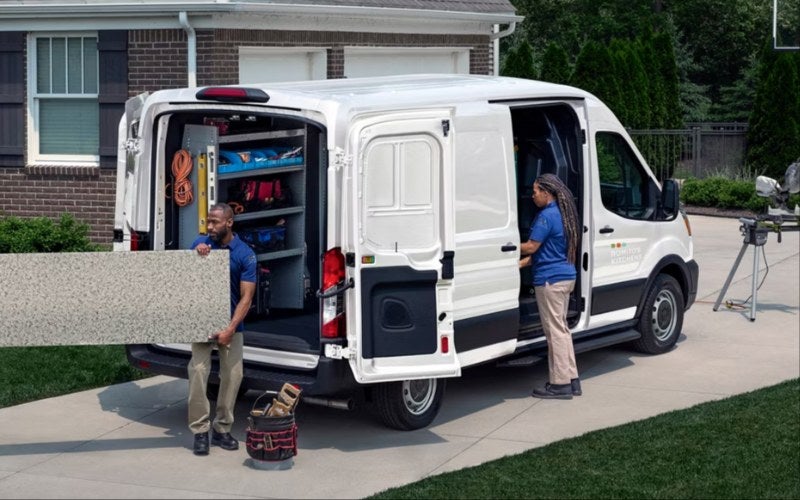
Ford describes the Transit® interior with the idea, “Imagine the Possibilities. We’ve Got the Room.” That is a fitting way to think about the van because it can be adapted for a wide range of work. A contractor may install trade-specific shelving and storage bins. A florist may need open cargo room for arrangements and supplies. A mobile detailing business may prioritize organized storage for hoses, chemicals, towels, and equipment. A nonprofit may use a Passenger Van model for group travel while still needing space for bags and supplies. The right configuration depends on how your business moves through the day.

Roof Heights and Body Lengths Make a Big Difference

The Transit® Cargo Van is available in low, medium, and high roof heights, plus regular, long, and extended body lengths. These choices allow shoppers to think carefully about the balance between interior room and everyday drivability. A high roof can make it easier to stand, load tall items, or create a more functional mobile workspace. A medium roof may offer a strong balance for shoppers who want added vertical space without choosing the tallest profile. A low roof can be a practical fit for operations that prioritize easier access to certain parking areas while still needing a capable cargo van.

Length is just as important. The extended body is useful for larger loads and more permanent storage systems, while long and regular body options can fit businesses that need cargo flexibility with a more compact footprint. For Douglasville-area routes that may include neighborhood streets, commercial centers, industrial areas, and interstate driving, matching the van size to the daily route can improve confidence behind the wheel.

  • Low roof: A practical choice for shoppers who want cargo capability with a lower overall height.
  • Medium roof: A balanced option for added vertical room and everyday usability.
  • High roof: A strong fit for shoppers who need to stand, move around, or load taller items more easily.
  • Regular length: Helpful for businesses that value maneuverability and flexible cargo room.
  • Extended length: Ideal for larger cargo needs, more shelving, or higher-volume delivery work.

After reviewing those choices, the next step is to think about how cargo is loaded and unloaded. If your workday includes frequent stops, rear-door access and side-door convenience may matter as much as overall capacity. If your van acts like a mobile workshop, interior organization may be the most important part of the build.

Payload, Towing, and the Work Behind the Space

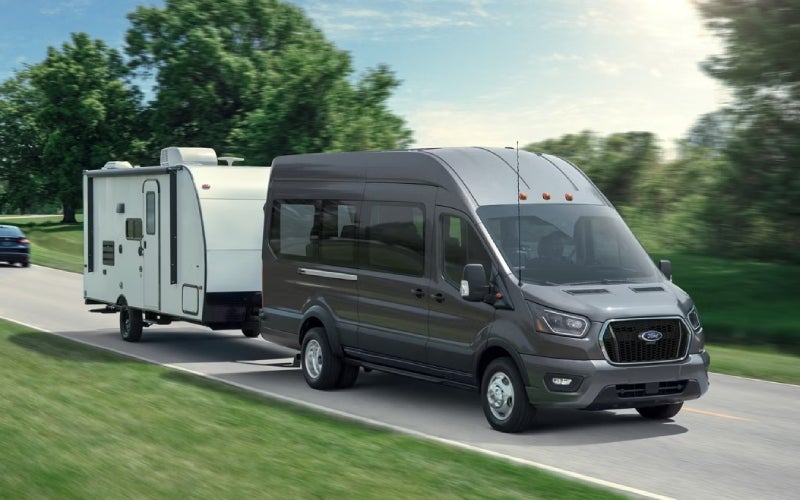
Cargo space only matters if the van can support the weight your business needs to carry. The Transit® Cargo Van offers up to 5,047 lbs of maximum payload when properly equipped, while maximum towing capacity reaches up to 6,900 lbs when properly equipped. Those figures make it a serious option for businesses that carry tools, parts, inventory, supplies, and equipment. The E-Transit™ Cargo Van offers a maximum payload of 3,322 lbs, giving businesses interested in a fully electric commercial van a capable platform for many delivery and service applications.

It is important to remember that payload is affected by configuration, passengers, installed equipment, and cargo. A shelving system, partition, roof rack, or specialty upfit can add weight before tools and products are loaded. That is why buyers should calculate typical daily cargo, not just the heaviest possible load. A careful review helps ensure the selected Transit® configuration supports the real work your team performs most often.

Which Transit® Configuration Fits Your Cargo Needs?

Different businesses ask different things from a van. A local delivery operation may want maximum open cargo room. A home services company may need an organized upfit with bins, drawers, and tool storage. A shuttle provider may choose a Passenger Van model and focus on seating, comfort, and luggage space. Ford makes that process easier by offering a range of Transit® models instead of one single layout.

  1. For delivery businesses: Consider a longer Cargo Van configuration with easy-access storage and enough room for route volume.
  2. For contractors: Look closely at medium or high roof options that can support shelving, tools, and taller materials.
  3. For mobile service teams: Focus on organization, payload, driver comfort, and available Intelligent All-Wheel Drive if job sites vary.
  4. For passenger transportation: Review Passenger Van XL and Passenger Van XLT seating layouts, including configurations for up to 15 people.
  5. For electric fleet planning: Explore the E-Transit™ Cargo Van, available Pro Power Onboard™ - 2.4 kW, and available Vehicle Integration System 2.0.

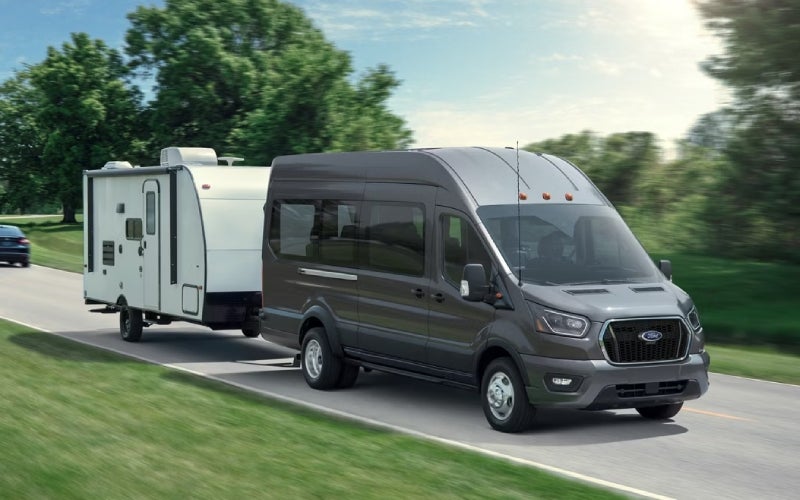
Those categories are a helpful starting point, but many businesses overlap. A catering company may need both cargo capacity and a comfortable cabin. A school or church may need passenger space on some days and gear space on others. A construction company may need towing capability, payload strength, and room for organized equipment. The Transit® is appealing because it can be configured around these layered needs.

Technology That Supports Daily Cargo Work

Drivers who spend long hours in a commercial van benefit from technology that is clear and easy to use. The Transit® offers a 12" center display with SYNC® 4, helping keep key controls visible and accessible. Standard Ford Co-Pilot360® technology includes front and rear parking sensors, Pre-Collision Assist® with Automatic Emergency Braking, and Lane-Keeping System. These features are useful when drivers are navigating customer driveways, loading zones, busy streets, and parking areas with limited space.

Passenger Van XLT models include standard Ford Co-Pilot360® Assist 2.0 with Adaptive Cruise Control and 360-Degree Camera. For shoppers who want added visibility support, the 360-Degree Camera can be especially helpful in a large van. It can make positioning the vehicle near loading docks, storefronts, job sites, and parking spaces feel more manageable.

How to Evaluate Cargo Space During a Test Drive

A test drive should include more than steering feel and acceleration. Bring measurements for the largest items your business carries. Think about how often cargo changes, whether drivers need to access tools from inside the van, and how much space upfits may require. If possible, compare multiple roof heights or body lengths on the same visit so differences are easier to judge.

  • Measure your equipment: Bring dimensions for ladders, toolboxes, bins, coolers, cases, or product displays.
  • Walk the cargo area: Check whether the roof height and floor length fit daily movement and loading needs.
  • Picture your upfit: Consider shelves, partitions, tie-downs, racks, or specialty storage before choosing a model.
  • Test door access: Make sure side and rear access match how your team loads throughout the day.
  • Check driver comfort: A van that carries cargo well should also feel comfortable and controlled for the person driving it.

Lithia Springs Ford can help shoppers compare Transit® configurations with a practical, business-focused approach. Our dealership is serving Douglasville, Austell, and Bremen with guidance for commercial buyers, fleet shoppers, and organizations that need a van built around real transportation demands.

Frequently Asked Questions:

Can the Transit® Cargo Van be used as a mobile workspace?

Yes. Depending on configuration and upfit, the Transit® Cargo Van can serve as a mobile workspace for trades, service businesses, installation teams, and specialty operators. Medium and high roof options are especially useful for shoppers who want more vertical room inside the van.

Is a high roof always the best choice for cargo?

Not always. A high roof is excellent for standing room and taller cargo, but some shoppers may prefer a low or medium roof based on parking needs, route types, or loading habits. The best roof height depends on your cargo, workspace needs, and daily driving environment.

How should I choose between Cargo Van and Passenger Van models?

Choose the Cargo Van if storage, tools, equipment, or deliveries are the main priority. Choose a Passenger Van XL or Passenger Van XLT if moving people is the primary job. If your needs overlap, compare seating layouts and cargo room carefully before deciding.

Does the E-Transit™ Cargo Van still offer useful cargo capability?

Yes. The E-Transit™ Cargo Van is designed for commercial use and offers a maximum payload of 3,322 lbs. It can be a strong fit for businesses with predictable routes, delivery needs, service calls, or electric fleet goals.

The Transit® gives Douglasville, GA businesses a practical way to match cargo room, passenger space, technology, and capability to real daily work. By comparing roof heights, body lengths, payload needs, and available driver-assist features, shoppers can choose a van that feels purpose-built instead of merely adequate. For growing teams, established fleets, and organizations ready for a more flexible commercial vehicle, the Transit® is well worth a closer look.
Request more 2027 Ford Transit information

Posted in:

Related Posts

Smart Seating and Easy Tech — 2026 Ford Transit Tips for Douglasville, GA Drive Days

Smart Seating and Easy Tech — 2026 Ford Transit Tips for Douglasville, GA Drive Days

Lithia Springs Ford - Smart Seating and Easy Tech — 2026 Ford Transit Tips for Douglasville, GA Drive Days Why the 2026 Ford Transit Fits Douglasville, GA Routines Douglasville days rarely look the same twice. Morning school carpools, church events, airport drop-offs, weekend tournaments, team-building outings—your calendar changes, and your van needs to adapt. The 2026 Ford Transit handles that shifting rhythm with ease thanks to flexible seating for up to 15, three roof heights, and two lengths that help you tailor space precisely. Add in available Intelligent AWD for confidence when you leave the pavement or navigate wet, steep driveways, and you have a van that just works, no matter how your week unfolds. Transit’s cabin is where that flexibility shines. The standard SYNC® 4 12-inch center display centralizes maps, phone, and audio, making it easy to update routes or answer last-minute itinerary changes. The new 8-inch cluster display keeps essentials—like the standard Tire Pressure Monitoring System—right where you can see them. And if you spend long stretches in the driver’s seat, the available 10-way power heated seats are an everyday difference-maker, especially when traffic lengthens your route. If you routinely mix passengers and gear, accessories and available storage solutions help secure bags, sports equipment, music cases, or tools. For frequent curbside loading, the Close Assist feature helps the sliding side door seal securely without slamming—courteous for early mornings, helpful when you’re wrangling a full crew, and simply less effort throughout the day. Interior Details That Save Time Time adds up in small moments—especially when you’re running multiple stops across Douglasville. Transit’s sliding door opening, available High Roof headroom, and smart aisle access make it easier for passengers to step in, find a spot, and settle quickly. If you need to shift your layout between weekdays and weekends, Transit’s seat configurations support that pivot. And at the rear, the available 253-degree rear door opening (on select models) helps streamline loading in tight spaces or angled driveways, giving you room to maneuver strollers, coolers, or rolling cases without a wrestling match. At the front, the standard SYNC® 4 system’s clear menus and responsive voice controls reduce taps and distraction. Want to send ETA updates or pull up an alternate route when a game runs long? You can do it quickly. The cabin’s new 8-inch cluster display adds at-a-glance clarity for speed, trip, and vehicle info—often the small sanity saver you appreciate most when you’re late for the next pickup. Powertrain Choices That Match Real Routes Whether you’re heading into Atlanta on I-20 or making your way across Chapel Hill, the Transit’s two available engines cover a wide range of needs. The 3.5L PFDi V6 is smooth and dependable for everyday passenger duty. If you often climb grades with a full van or want extra punch for highway merges, the 3.5L EcoBoost® V6 steps in confidently. Rear-wheel drive is standard for balanced handling, and available Intelligent AWD adds traction assurance on gravel, wet leaves, or sloped parking lots that can get slick after a shower. When your plans include a small trailer—team equipment, a utility box, or weekend toys—the Transit can tow up to 4,500 pounds when properly equipped. Pair that with the available 31-gallon Extended Range fuel tank, and you’ll spend more of your day moving people and less time planning fuel stops between games, services, or airport runs. Driver-Assist Tech That Works With You Ford Co-Pilot360® is now standard on the 2026 Transit, and those features matter when you’re navigating busy lots or returning to Douglasville after dark. Pre-Collision Assist® with Automatic Emergency Braking provides a welcome layer of backup, Lane-Keeping System lends a steady hand on longer drives, and the front and rear parking sensors help you ease into tight spots near the field or at church without guesswork. The result is a van that supports you quietly, day in and day out. And because good tech fades into the background when it’s doing its job, Transit’s driver-assist features quickly feel natural. You’ll still rely on your own awareness, but the system’s simple, consistent feedback is there when traffic surprises you or a passenger calls from the third row and your attention splits for a moment. Quick Tips For Choosing Your Configuration Roof height: Low for garages, Medium for standing room, High for maximum headroom Length: Long for balance, Extended for added seating plus luggage Drive: RWD for stability, Intelligent AWD available for mixed-surface confidence Seats: Scale your layout to peak headcount, not just average days Pick your roof and length first—those decisions shape everything else. If your schedules include covered parking or drive-through limitations, the Low Roof model helps you fit. If passengers need easier movement in the cabin, the Medium or High Roof options change the game. Choose Extended length when you routinely carry full seating and luggage. For powertrains, match the 3.5L PFDi V6 to steady, predictable routes and the 3.5L EcoBoost® V6 to heavier days with more highway time. Frequently Asked Questions: How many people can the 2026 Ford Transit seat? The 2026 Transit passenger models can seat up to 15, with layouts that support different mixes of people and cargo. Is Intelligent AWD worth it around Douglasville? If you drive on gravel roads, frequently face wet or leafy surfaces, or want extra confidence on sloped driveways, available Intelligent AWD is a smart add-on. What size screens does the Transit include? SYNC® 4 with a 12-inch center display is standard, and the new 8-inch cluster display brings key vehicle info and standard TPMS into clear view. Can the Transit tow? When properly equipped, the 2026 Transit can tow up to 4,500 pounds, making it a solid fit for small trailers, gear, or weekend toys. If you’re weighing how each piece fits your day-to-day life, we’re here to help you map a configuration to your actual routes, stops, and parking. Lithia Springs Ford is proud to be part of the community—serving Douglasville, Austell, and Bremen—and we’re happy to walk you through roof height, length, seating, and drivetrain with practical, local insight. With the Transit’s clear, thoughtful upgrades for 2026, it’s easier than ever to bring everything and everyone along, comfortably and on time. Request more 2026 Ford Transit information

Seating, Cargo, and Tech That Scale — 2026 Ford Transit Insights for Hiram, GA Teams

Seating, Cargo, and Tech That Scale — 2026 Ford Transit Insights for Hiram, GA Teams

Lithia Springs Ford - Seating, Cargo, and Tech That Scale — 2026 Ford Transit Insights for Hiram, GA Teams The 2026 Ford Transit is built for teams that grow, routes that evolve, and work that rarely waits. If you operate around Hiram, GA — juggling school pickups on Wendy Bagwell Parkway, staff carpools to Paulding jobsites, or weekend church retreats — the Transit’s seating flexibility and smart tech can make every trip smoother. In this guide, we will unpack real-world considerations for choosing roof height, length, and seating, then connect those choices to everyday usability and maintenance planning. Choosing the Right Capacity and Layout Start with a simple question: how many people do you need to move, and how often? The Transit’s available configurations accommodate up to 15 passengers, with row layouts that can be adjusted as your organization changes. If you frequently alternate between full rosters and gear-heavy days, consider a setup that leaves dedicated space for bins, duffels, or musical instruments — the Transit’s organization accessories help secure loose items so your aisles remain clear and safe. Roof height and body length matter in subtle but important ways. The available High Roof makes stepping in and out easier while improving comfort for adult passengers. If your team often stands to adjust bags or child restraints, the extra headroom pays off every day. The Extended length option frees up room for luggage and special equipment without cramping the last row. For Hiram-area routes where lots, fields, and community centers vary from stop to stop, that flexible space helps you keep a predictable schedule. Powertrain and Traction Choices for Everyday Confidence Under the hood, the Transit offers two robust options — the 3.5L PFDi V6 or the 3.5L EcoBoost® V6 — so you can match power and responsiveness to your driving profile. If your week mixes suburban driving with highway stints on US-278 and GA-92, the EcoBoost® delivers strong passing power with a quiet, refined drive. Standard rear-wheel drive keeps things simple and balanced, while available Intelligent All-Wheel Drive provides added traction when you face wet construction entrances, grass fields, or gravel drives near Ben Hill Strickland Sr. Memorial Park. The standard 25-gallon fuel tank is a solid fit for most metro-area routes, but if your programs run longer day trips — say, Hiram to Kennesaw Mountain trails or museums on the west side of the metro — the available 31-gallon extended-range tank minimizes stops and keeps your group on schedule. Technology That Keeps Everyone in Sync Every 2026 Transit Passenger Van includes SYNC® 4 with a 12-inch center display. Why does this matter? A large, quick interface cuts down on driver distraction. Whether you are punching up directions to Hiram High School, streaming audio during a long shuttle, or managing hands-free calls, the system’s speed and clarity keep focus on the road. The new 8-inch cluster display complements that by surfacing essentials — including Tire Pressure Monitoring System readings — at a glance. Driver assistance makes the daily routine less strenuous for whoever has the keys. Ford Co-Pilot360® includes Pre-Collision Assist® with Automatic Emergency Braking and a Lane-Keeping System, plus front and rear parking sensors that are a gift in tight pickup loops and busy community lots. The result is less stress at the wheel and a calmer cabin for passengers. Loading, Unloading, and Everyday Ease Seemingly small features compound into big advantages over hundreds of stops. The available 253-degree rear door opening makes loading carts or coolers easy when curb space is tight. Close Assist helps with confident sliding-door closure so you are not wrestling doors when your hands are full. Thoughtful storage — from the center console to available accessories — keeps driver and group essentials where they belong. Seating comfort matters too. Available heated, 10-way power front seats take the edge off long shifts, and the Transit’s aisle space helps with buckling in little ones or assisting older passengers. When riders can settle in quickly, you spend less time idling and more time moving. Ownership Planning and Service Considerations For organizations in and around Hiram, predictable maintenance and minimal downtime matter as much as purchase decisions. Ford’s support ecosystem — including Pickup & Delivery and Ford Mobile Service — helps keep your Transit in action without rerouting your day. Oil changes, rotations, batteries, and many common services can be handled on your schedule, reducing cancelled trips or last-minute scrambles for backup vehicles. Think ahead about accessories and simple wear items. Floor liners protect high-traffic aisles, while seat covers and cargo-area organizers maintain a professional look over longer service. Planning a storage strategy from day one keeps aisles safe and helps drivers perform quick visual checks before and after each run. Frequently Asked Questions: How many passengers can the 2026 Transit seat comfortably? The Transit can be configured for up to 15 passengers, with flexible rows that let you balance rider comfort and luggage or equipment space based on the day’s route. Which roof height should I choose for Hiram-area routes? If your riders are adults or you load bulky items often, the available High Roof is a smart pick. The added headroom speeds boarding and improves comfort at full capacity. Is Intelligent AWD worth it for my use? If your routes include gravel drives, grassy fields, or work-site entrances, available Intelligent AWD offers reassuring traction and helps drivers feel composed on variable surfaces. What technology is standard on every Transit Passenger Van? SYNC® 4 with a 12-inch center display is standard, along with Ford Co-Pilot360® driver-assist features and the new 8-inch cluster display with TPMS. How can I simplify upkeep and minimize downtime? Pair scheduled maintenance with Pickup & Delivery or Ford Mobile Service where available, and equip your van with protective liners and organizers to reduce wear over time. At Lithia Springs Ford, we understand how Hiram’s daily rhythms shape your needs, and we structure our guidance, trade-in process, and service support around keeping your team moving. We are proud to be serving Dallas, Carrollton, and Hiram with a Transit lineup that scales alongside your routes and responsibilities. When you are ready to refine seating, driveline, and accessory choices, our team will help you finalize a configuration that fits your riders and your budget for the long haul. Request more 2026 Ford Transit information

How Intelligent AWD on the 2026 Ford Transit Keeps Teams Moving Around Carrollton, GA

How Intelligent AWD on the 2026 Ford Transit Keeps Teams Moving Around Carrollton, GA

Lithia Springs Ford - How Intelligent AWD on the 2026 Ford Transit Keeps Teams Moving Around Carrollton, GA When deadlines stack up and your team’s schedule is tight, traction is not just a nice-to-have—it is a time saver. That is where available Intelligent AWD on the 2026 Ford Transit® steps in. This confidence-boosting system monitors wheel slip and driving conditions, then smartly distributes torque to help the van stay composed on everything from damp gravel lots and uneven job sites to cambered neighborhood streets. It does the quiet, behind-the-scenes work that turns a complex route into a routine one, so your focus stays on people, gear, and the next stop. Pair Intelligent AWD with your choice of the 3.5L PFDi V6 or the available 3.5L EcoBoost® V6, add the standard 25-gallon or available 31-gallon extended-range fuel tank, and you have a versatile people-mover that can adapt as the day evolves. Seating for up to 15 allows flexible rosters—church groups, hotel shuttles, campus teams—and the available 50/50 hinged rear doors with a 253-degree opening make loading bulky gear far easier in tight alleys downtown. Close Assist on the sliding side door means no more re-closing when hands are full. Inside, standard SYNC® 4 with a 12-inch center display and the new 8-inch cluster display keep essential info glanceable, while Ford Co-Pilot360® driver-assist features—front and rear parking sensors, Pre-Collision Assist® with Automatic Emergency Braking, and Lane-Keeping System—help drivers stay confident when schedules are stacked back-to-back. For teams that split time between paved corridors and mixed-surface access roads, Intelligent AWD helps reduce spin-ups that slow departures. Transit is built to keep you moving, whether you are staging at a hotel portico, meeting a youth team behind a rec center, or backing into a modest loading bay off a two-lane county road. The system’s proactive torque shifts are especially helpful on wet leaves, loose gravel, and painted curbs—minor variables that can compound delays during peak hours. Transit’s flexibility is also a huge factor. Three roof heights and two lengths let you right-size interior volume for tall passengers, stackable cases, and aisle space. Available 10-way power heated front seats keep drivers focused during longer stints, and the large center console with integrated shifter and dual cup holders organizes the small essentials that matter when you are on the clock. Add in up to 4,500 pounds of towing and a maximum payload of 3,475 pounds, and Transit has the depth to handle both people and the gear that travels with them. Available Intelligent AWD: Automatically shifts torque to the wheels with the most grip for added confidence. Two engine options: Choose the 3.5L PFDi V6 or available 3.5L EcoBoost V6 to balance power and efficiency needs. Flexible configurations: Three roof heights and two lengths to match your passenger and cargo priorities. Driver-focused tech: Standard SYNC 4 with a 12-inch display and a new 8-inch cluster keep info at a glance. Driver-assist confidence: Ford Co-Pilot360 features are standard for everyday awareness. Easy access: Available 253-degree rear door opening and Close Assist on the side door simplify loading. Those details matter on real routes. Consider the midday shuffle: your van drops a group, detours to pick up equipment, then navigates a narrow entrance to stage for the next arrival. Intelligent AWD helps ease the micro-maneuvers that often slow things down, and the wide-opening rear doors create a straightforward load path for large cases or luggage racks. Meanwhile, SYNC 4 makes short work of reroutes and calls, so your driver is less distracted and more organized. If you are weighing configurations, start with people first. How many seats do you need most days, and how often does that change? Transit’s seating flexibility means you can scale up to 15 passengers or keep more aisle space for bags and cases. Want more confidence in tight parking? Front and rear parking sensors, a core part of Ford Co-Pilot360, offer helpful feedback as you position the van in hotel loops or church lots. Upfits are straightforward, too. Many organizations add easily removable bins, partitions, and communications hardware to tailor the cabin without locking themselves into a single-use layout. That flexibility extends the van’s life across various programs and teams. And when you are ready to dial in day-to-day service, Ford Pickup & Delivery and Ford Mobile Service help keep maintenance in the background, so the van is on the road when you need it. Curious how Intelligent AWD could fit your routes? A short test drive speaks volumes. You will feel how the system calms minor surface changes, tightens departure timing, and supports drivers who rotate shifts. One feature rarely does it all, but Intelligent AWD on Transit gets close—quietly solving small problems that add up to a big win for schedules. Frequently Asked Questions: Is Intelligent AWD always on? Yes. The system continuously monitors conditions and proactively shifts torque to the wheels with the most grip—no driver intervention needed. Does Intelligent AWD reduce interior space? No. Transit’s available AWD packaging preserves the cabin’s core dimensions, so seating for up to 15 and storage plans remain flexible. Can I tow with AWD? Transit is engineered for up to 4,500 pounds of towing. AWD’s confident traction can help when pulling away from uneven surfaces with a loaded trailer. Which engine pairs best with AWD? Both engines work well. The available 3.5L EcoBoost V6 offers robust torque for stop-and-go routes with full passenger loads or frequent towing. How does SYNC 4 support busy routes? SYNC 4 with Enhanced Voice Recognition streamlines directions, calls, and quick info lookups, so drivers can keep eyes forward and hands on the wheel. When you are ready to map configurations to your routes, our team is happy to help you test options and plan upfits that make daily work easier. Lithia Springs Ford is proud to support organizations serving Dallas, Carrollton, and Hiram with a Transit lineup built to match real schedules, real loads, and real streets. Request more 2026 Ford Transit information