



Electric Vehicles vs. Gas Vehicles Comparison
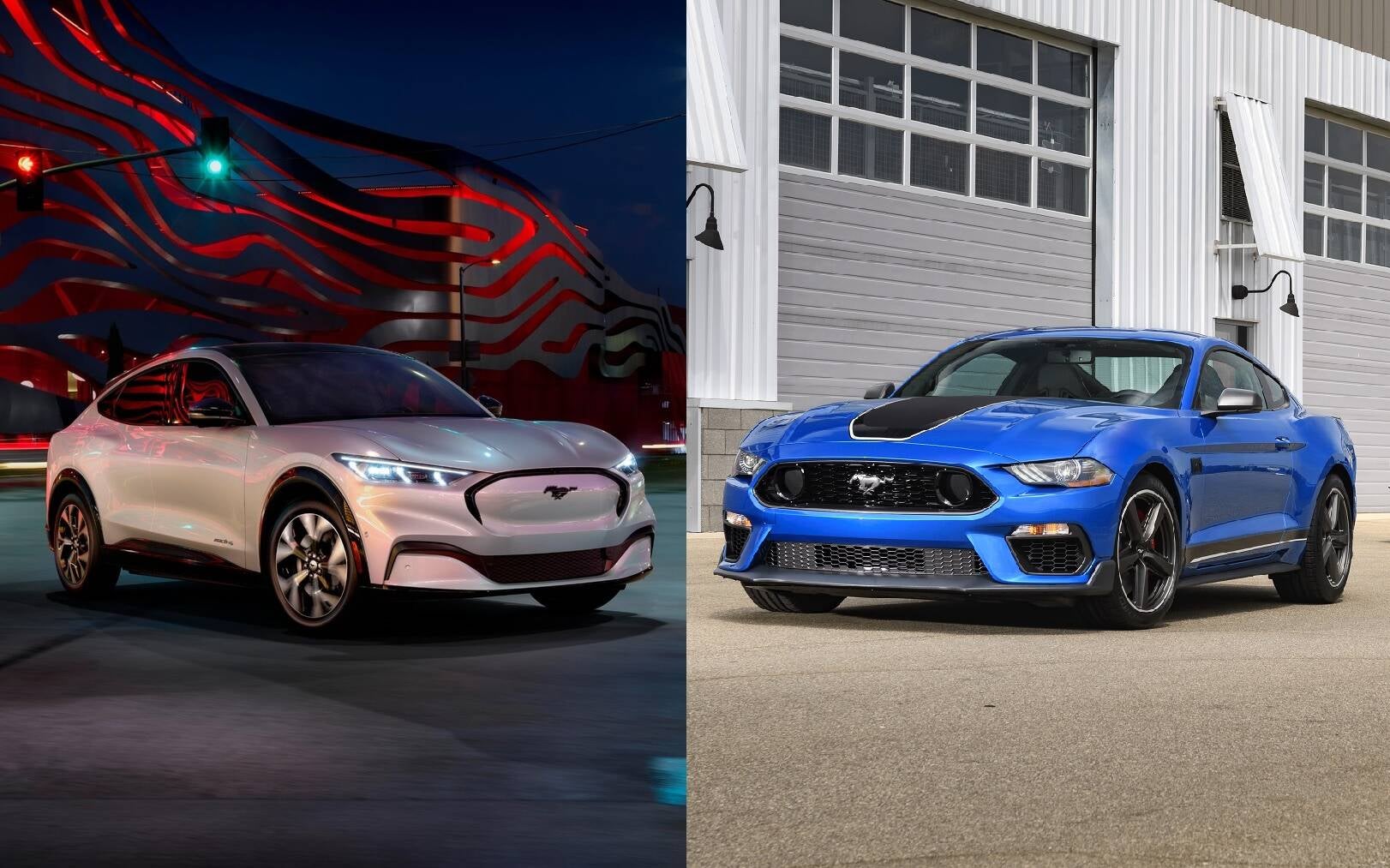
The future is now in Lithia Springs, Georgia. And it's all thanks to the impressive variety of Ford electric vehicles. Electric vehicles (EVs) have fewer moving parts, don't use conventional gas, and often cost less over the long run than a conventional internal combustion engine (ICE) vehicle.
There are also perks to driving EVs that you don't get driving conventional cars. These perks make driving Ford electric vehicles like the 2024 Mustang Mach-E or the 2024 Ford F-150 Lightning more convenient. Let's compare Ford's electric vehicles vs. gas vehicles to see which is right for your family.
Fuel Cost Comparison
Electric vs Gas Ford vehicle comparisons start at the gas pump. For example, when we compare the cost of driving 100 miles in a 2025 F-150 Lightning vs a 2025 Ford F-150 gas model, there's a substantial difference.
MPGe vs MPG Explained
First, a quick note on MPGe and MPG figures. MPGe is equal to 33.7 kWh, which is the same amount of energy contained in 1 gallon of gas, so 1 MPGe = 1 MPG.
EV vs Gas Mileage
The F-150 Lightning EV pick-up is rated at 78 MPGe in the city and 63 MPGe on the highway, while the F-150 powered by the Ecoboost V6 is rated at 19 MPG in the city and 24 MPG on the highway.
Cost Per Mile
At Georgia's current average price of 13.7c per kWh, it costs about $4.61 to go 63 miles on the highway.
At an average cost of around $3 per gallon, it will cost about $7.88 to go the same distance in a conventional gas car.
That's about 7 cents per mile for the EV versus 12.5 cents per mile for an ICE vehicle.
The difference is even bigger in cities, where fuel economy is better for an EV but worse for conventional gas.
Typically, an EV driver who charges at home each night will spend about $800-$1,000 less on fuel charges.
Maintenance Costs
With no engine oil, air filter, transmission fluid, or spark plugs to worry about, maintenance costs are much lower in a Ford EV. And, brake pad wear is lower on EVs. That's because electric vehicles use regenerative braking to recharge the battery, which causes more of an engine-braking effect and slows the car down more without using the brakes. This is what EV enthusiasts refer to as "one-pedal driving".
The average annual Ford maintenance cost is $775 for Georgia drivers. EV owners can expect to spend about 40% less on annual maintenance.
EV vs. Gas-Powered Ford
We can take a closer look at the relationship between electric vs gas vehicles with these two quick Ford vehicle comparisons:
2024 F-150 Lightning vs F-150

Let's compare two common trim levels on the EV and gas versions of the 2024 F-150, the XLT.
2024 Ford F-150 Lightning XLT
- Drivetrain:Twin electric motors, AWD
- Horsepower: 580 HP
- Torque: 775 lb-ft
- Fuel economy: 76/61/68 MPGe city/highway/combined [1 MPGe = 1 MPG]
- Range: 240 miles (up to 320 miles for higher trims)
- Bed size: 5.5ft
- Front cargo volume: 14.1 cu. ft
- Towing capacity: 7,700 lbs
- Drivetrain: 3.5-liter EcoBoost® V6, 4x4
- Horsepower: 400 HP (up to 450 HP on higher trim levels)
- Torque: 500 lb-ft
- Fuel economy: 19/25/21 MPG city/highway/combined
- Range: 23 gallons, 480 miles
- Bed size: 6.5ft
- Front cargo volume: N/A
- Towing capacity: 8,100 lbs
Ford Mustang vs Electric Ford Mustang Mach-E
While the Mustang Mach-E is a performance crossover and the Ford Mustang is a performance fastback many Ford vehicle comparisons for electric vs gas vehicles consider the two back-to-back. Here's a snapshot:
2024 Ford Mustang Mach-E GT
- Drivetrain: Twin electric motors, AWD
- Horsepower: 365 HP
- Torque: 500 lb-ft
- Fuel economy: 90/77/84 MPGe city/highway/combined [1 MPGe = 1 MPG]
- Range: 300 miles
- Rear cargo volume: 29.7 cu. ft
- Front cargo volume: 4.7 cu. ft
- Drivetrain: 5.0-liter Ti-VCT V-8 Engine, RWD
- Horsepower: 480 HP (up to 450 HP on higher trim levels)
- Torque: 486 lb-ft
- Fuel economy: 15/24/18 MPG city/highway/combined
- Range: 16 gallons, 288 miles
- Rear cargo volume: 11.4 cu. ft
- Front cargo volume: N/A
Other EV Perks
Bonus EV perks are available for Georgia drivers. For example, there is a Federal tax credit of up to $7,500 for EV drivers. Businesses can also earn a tax credit for installing an EV charger.
Drivers who register an EV are eligible to use carpool lanes even if there's only one person in the vehicle, which can dramatically cut down commuting times.
EV vs Gas
Electric vehicles offer stronger performance and better fuel economy but less range than conventional gas counterparts. There are also considerable benefits and incentives to make EVs more compelling for Lithia Springs drivers.
Contact the sales team at Lithia Springs Ford to explore which Ford vehicle is right for your family.