



Lithia Springs Ford - Does the 2027 Ford Explorer Have Enough Cargo Space for Douglasville, GA Families?
The 2027 Ford Explorer® gives Douglasville, GA families a thoughtful amount of cargo room while still offering the passenger flexibility that makes a three-row SUV so useful. For many shoppers, the real question is not simply how much space an SUV has on paper. It is whether the cargo area works for school bags, groceries, sports equipment, luggage, pets, strollers, home project supplies, and the everyday mix of items that tend to ride along with a busy household.
That is where the Explorer® makes a strong case. With all seats in place, every 2027 Explorer® model provides 16.3 cu ft of cargo space behind the third row. That space is useful for daily errands, backpacks, a few small bags, or a compact grocery run without folding seats. When more room is needed, the cabin can be reconfigured to open up significantly more cargo volume. Active and ST-Line models offer up to 85.8 cu ft of maximum cargo capacity, while Tremor®, Platinum™, and ST models provide up to 85.3 cu ft. Those numbers place the Explorer® firmly in the practical range for families who need real versatility from one vehicle.
How the Explorer® Cargo Area Works in Real Life
Families around Douglasville often need an SUV that can shift roles quickly. A weekday may involve commuting, after-school pickup, and errands along Chapel Hill Road or Highway 5. A weekend may call for folding seats to fit coolers, folding chairs, sports gear, or luggage for a longer drive. The 2027 Explorer® is designed for that kind of variety. It does not limit shoppers to a single use case. Instead, it gives owners multiple ways to balance passengers and cargo.
The 16.3 cu ft of cargo space behind the third row is helpful when all seats are occupied. That is important because many three-row SUV shoppers want the ability to carry passengers without giving up every inch of storage. If the third row is not needed, folding it creates a larger cargo floor for bulkier items. Fold additional rows, and the Explorer® becomes a strong hauler for larger loads. Available PowerFold® third-row seats on Tremor® and standard PowerFold® third-row seats on ST and Platinum™ make that transition easier, especially when hands are full.
Passenger Seating Matters as Much as Cargo Space
Cargo space is only part of the family-SUV equation. The seating layout also affects how useful the vehicle feels. The 2027 Explorer® seats six or seven people depending on configuration. Second-row captain’s chairs are standard on all models, creating a six-passenger arrangement with easier access to the third row. This setup can be ideal for families with older children, frequent carpool needs, or passengers who prefer more personal space in the second row.
For shoppers who want maximum seating, most Explorer® models except Tremor® offer an available second-row bench seat that increases capacity to seven. That option can be helpful for larger households or drivers who regularly transport extra passengers. The key is thinking about how often every seat will be used compared with how often cargo space matters. A family that regularly travels with six people may prefer captain’s chairs, while a family that needs the occasional seventh seat may want to consider the bench-seat layout.
What to Bring When Evaluating Cargo Space
Online research is helpful, but cargo space becomes easier to understand when shoppers connect the numbers to real items. During a test drive, it can be useful to bring or measure the gear that matters most. The Explorer® offers generous cargo dimensions, but the best fit always depends on the items a household carries most often.
- Strollers and child gear: Check how easily larger items fit behind the third row and how much room remains for bags.
- Sports equipment: Test longer items such as baseball bags, folding chairs, golf clubs, or soccer gear with the third row folded.
- Luggage: Consider how many suitcases fit when the cabin is set up for the number of passengers normally traveling.
- Pet supplies: Look at floor height, entry width, and how the cargo area works with crates or travel accessories.
- Home project items: Fold the seats and estimate space for boxed furniture, tools, storage bins, or gardening supplies.
After checking these items, shoppers often get a clearer sense of which trim and seating configuration is right. Cargo volume is important, but convenience features, seat-folding ease, and access to the third row can matter just as much during daily use.
Which Explorer® Trim Is Best for Cargo-Focused Families?
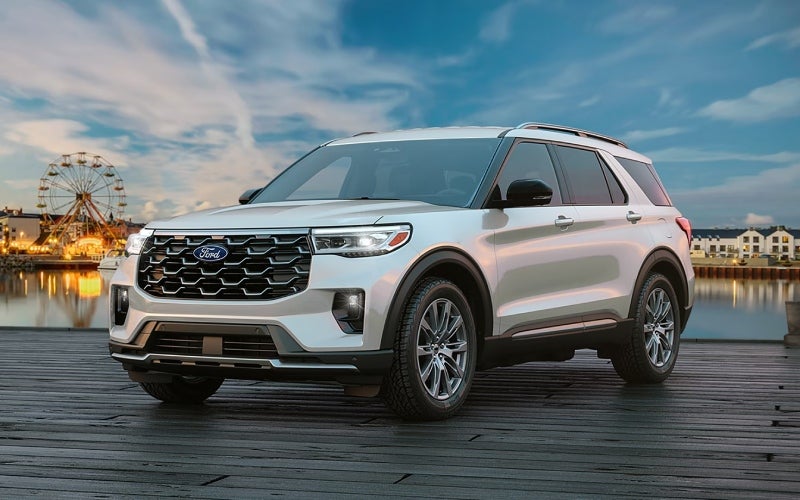
Active and ST-Line models offer the highest maximum cargo volume in the lineup at up to 85.8 cu ft, making each a strong choice for shoppers who want maximum interior utility. Active is a practical starting point for families who want the Explorer® formula with useful comfort and technology. ST-Line adds sport-inspired design, unique cloth-trimmed front- and second-row seats with red stitching, a 360-degree camera, and a B&O® Sound System by Bang & Olufsen® with 10 speakers, including a subwoofer.
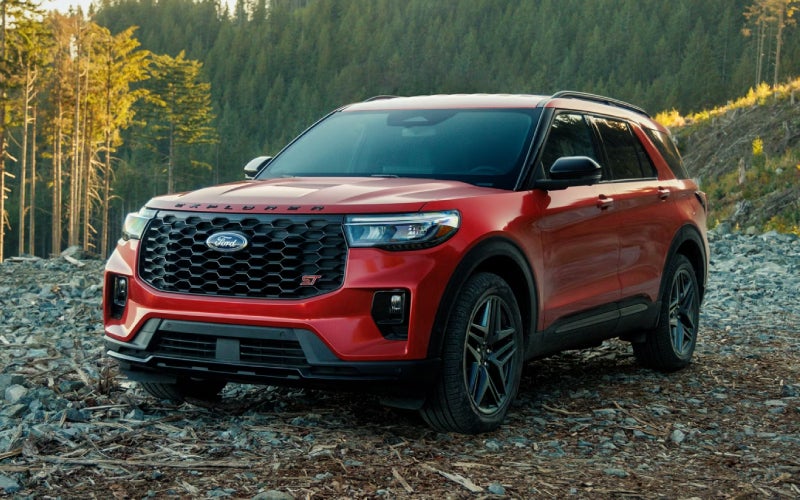
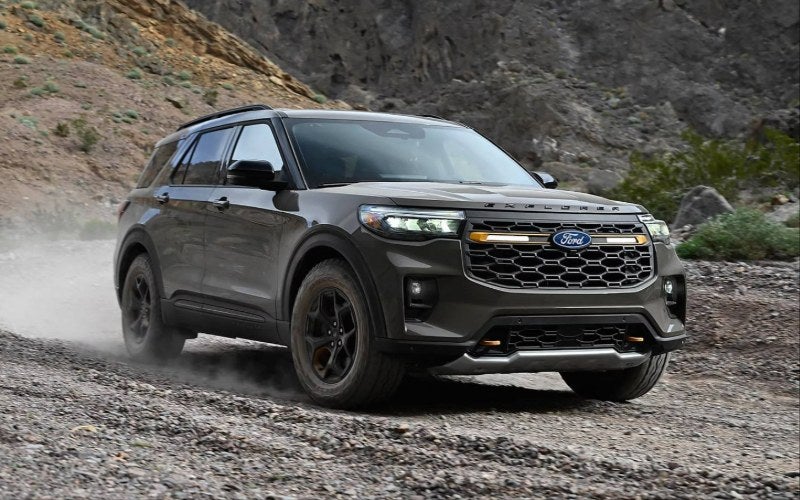
Tremor®, Platinum™, and ST models offer slightly less maximum cargo capacity at up to 85.3 cu ft, but each adds a different kind of appeal. Tremor® brings off-road-tuned suspension, increased ride height, underbody protection with front and rear deflector plates, and a model-exclusive Torsen® limited-slip rear axle. Platinum™ emphasizes upscale comfort with available heated, ventilated, massaging front-row seats with leather inserts and available panoramic Vista Roof® with power shade. ST focuses on performance with a 3.0L EcoBoost® engine, sport-tuned suspension, and performance brakes with red-painted calipers.
Technology That Supports Family Driving
The 2027 Explorer® is not just spacious. It also brings technology that helps make family travel feel more organized and confident. The Ford Digital Experience supports familiar digital functionality and apps designed to enhance the drive. Ford Co-Pilot360® driver-assist features help support confidence behind the wheel, while available BlueCruise hands-free highway driving can assist with steering, braking, and acceleration on compatible roads while the driver keeps eyes on the road ahead.
These features matter for families because a good SUV should reduce stress. A well-designed cabin, useful driver-assist technology, and flexible storage can make daily driving smoother. Whether loading groceries after errands, managing school drop-off, or preparing for a longer trip, the Explorer® is designed to support the full routine instead of only one part of it.
Frequently Asked Questions:
How much cargo space is behind the third row of the 2027 Ford Explorer®?
The 2027 Explorer® offers 16.3 cu ft of cargo space behind the third row with all seats in place. That space is useful for smaller errands, everyday bags, groceries, and compact travel items while still keeping all three rows ready for passengers.
Which 2027 Explorer® models have the most maximum cargo space?
Active and ST-Line models offer up to 85.8 cu ft of maximum cargo capacity. Tremor®, Platinum™, and ST models offer up to 85.3 cu ft. The difference is small, so shoppers should also compare seating, comfort, capability, and technology features.
Can the 2027 Ford Explorer® seat seven people?
Yes. The Explorer® can seat seven people when equipped with the available second-row bench seat, which is offered on all models except Tremor®. Standard second-row captain’s chairs create a six-passenger layout.
Is the 2027 Ford Explorer® a good SUV for family road trips?
Yes. Its three-row seating, flexible cargo space, available premium audio, available BlueCruise, and strong engine options make it well suited for family travel. The best configuration depends on passenger count, cargo needs, and preferred comfort features.
For Douglasville, GA shoppers who need one SUV to handle family schedules, errands, weekend gear, and longer drives, the 2027 Ford Explorer® offers a smart blend of space and flexibility. Its cargo capacity is generous, its seating options are practical, and its trim lineup gives families meaningful choices. The best way to decide is to compare the interior in person, fold the seats, open the cargo area, and imagine the vehicle loaded the way it would be used most often.
When evaluating the Explorer®, think beyond the largest number on the spec sheet. Consider how often the third row will be used, whether captain’s chairs or a bench seat makes more sense, and which convenience features will make daily life easier. With up to 85.8 cu ft of cargo room on select models and three rows of adaptable seating across the lineup, the 2027 Ford Explorer® is well prepared for the way families actually drive.